How to Choose Wall Art for Your Home: A Slow Looking Guide
Choosing wall art sounds simple until the wall is empty. A room can be beautifully furnished and still feel unfinished if the artwork feels random, too decorative, too small, too loud, or disconnected from the life of the home.
The best wall art does more than fill space. It changes how a room feels. It gives the eye somewhere to rest. It brings memory, colour, rhythm and atmosphere into daily life.
This guide is not about matching a picture to a sofa in the fastest possible way. It is a slow looking approach to choosing art for the home: how to read colour, mood, scale, subject and story before deciding what belongs on your wall.
The simple rule: choose the feeling before the image
Most people begin with the subject. They search for flowers, landscapes, portraits, abstract art, famous paintings or living room wall art. That is natural, but it is not always the best first question.
Before choosing the image, choose the feeling you want the room to hold.
- Should the room feel calm or expressive?
- Should the artwork create focus or blend gently into the atmosphere?
- Should it feel classic, contemporary, romantic, intellectual, playful, quiet or ceremonial?
- Should it make the room warmer, lighter, deeper or more personal?
Once the feeling is clear, the artwork becomes easier to evaluate. A painting can be beautiful and still wrong for a specific room. Another can be modest at first glance, yet perfect because it supports the emotional tone of the space.
Why choosing wall art often feels difficult
Wall art is difficult because it sits between interior design and personal meaning. Furniture can be measured. A lamp can be judged by function. Art asks a more subtle question: do I want to live with this image every day?
That question matters. Art in the home is not seen once, as it might be in a museum. It is encountered repeatedly: in morning light, in evening quiet, in the background of conversations, beside books, flowers, coffee cups and ordinary routines.
Good wall art survives repetition. It does not reveal everything in one glance. It leaves enough space for return.
A slow looking method for choosing wall art
Slow looking means spending more time with an image before judging it. Instead of asking only whether you like it instantly, you ask what it does over time.
Try this before choosing a piece for your home:
- Look at the artwork for one full minute without scrolling away.
- Notice the first emotion it creates.
- Identify the dominant colours and the quiet secondary colours.
- Ask where your eye naturally enters the image.
- Look for movement, stillness, tension or balance.
- Imagine the artwork in morning light and evening light.
- Ask whether it would still interest you after a month.
This method is especially useful for art-based objects, where the value is not only decorative. A work that rewards slow looking can become part of the emotional architecture of a room.
1. Start with mood, not trend
Trends can be useful for discovering forms, colours and styles, but they are a weak foundation for choosing art. A trend belongs to a season. Wall art belongs to a room, and often to a life stage.
For a bedroom, you may want softness, intimacy and visual quiet. For a dining room, you may want warmth, conversation and a sense of occasion. For a study, you may want depth, concentration and a slightly more serious atmosphere. For a hallway, you may want an image that creates a pause without demanding too much attention.
When you choose by mood first, the artwork begins to serve the room instead of simply decorating it.
2. Read the colour temperature
Colour is one of the fastest ways art changes a room. But it is not enough to ask whether an artwork is blue, green, red or neutral. The more useful question is temperature.
Warm colour tends to create closeness: ochre, rose, terracotta, gold, cream, deep red and warm brown. Cool colour tends to create air and distance: blue, grey, silver, violet, pale green and clear white.
A room with many warm materials, such as wood, linen, brass and candlelight, may welcome a cooler artwork to create balance. A minimal room with white walls and stone surfaces may need warmer colour to avoid feeling sterile.
Colour does not need to match perfectly. In fact, exact matching can make a room feel flat. The strongest interiors often use artwork to introduce a related but slightly unexpected tone.
3. Consider scale and viewing distance
Scale changes everything. A small artwork on a large wall can feel lost. A large artwork in a narrow space can feel oppressive. The right scale depends on the wall, the furniture beneath it and the distance from which it will be viewed.
As a general principle, art placed above furniture should feel visually connected to that furniture. It does not need to be exactly the same width, but it should not look as if it is floating without relationship to the objects below.
Viewing distance also matters. A detailed image works beautifully in a reading corner, above a desk or in a hallway where people pass closely. A bold composition works better across a living room, where the artwork needs to hold its presence from several metres away.
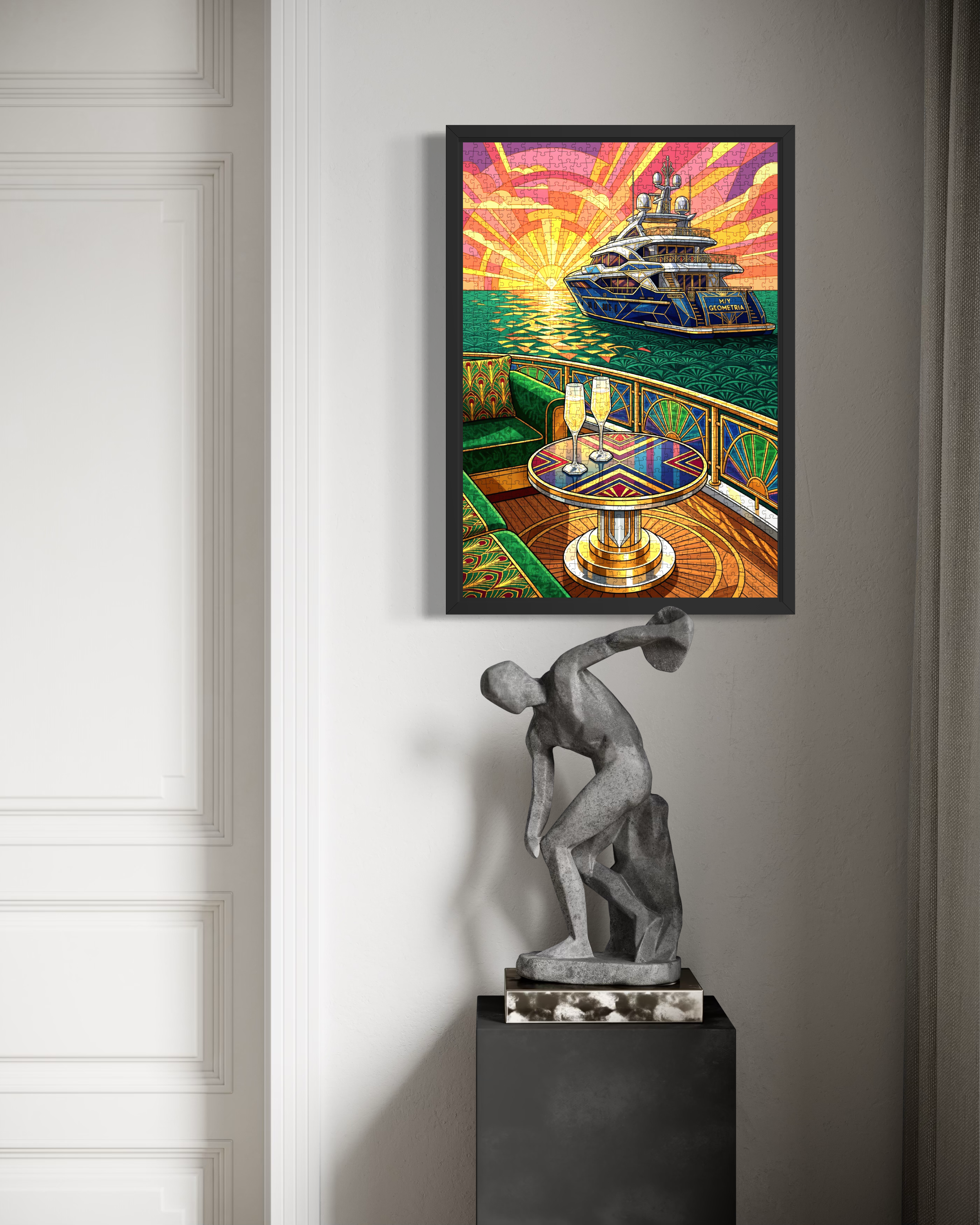
This is one reason art puzzles can be interesting as wall pieces. From a distance, the image reads as a complete artwork. Up close, the piece structure reveals the time and attention behind it.
4. Look at composition, not only subject
Subject is what the artwork shows. Composition is how the artwork holds together.
A landscape, portrait, floral still life or interior scene can feel completely different depending on the arrangement of shapes, lines and empty space. A central composition feels stable. A diagonal composition feels active. A symmetrical image feels formal. A loosely arranged image feels more natural and relaxed.
When choosing wall art, ask how the composition will behave in the room. Does it create calm? Does it pull the eye upward? Does it widen the space? Does it create movement where the room feels static?
For example, an interior painting such as Interior, Light of Spring can bring stillness and architectural quiet into a room. A floral modernist work such as Vase de fleurs can introduce colour, rhythm and a more expressive energy.
5. Decide whether the room needs a classic or contemporary voice
Classic art and contemporary art create different kinds of presence.
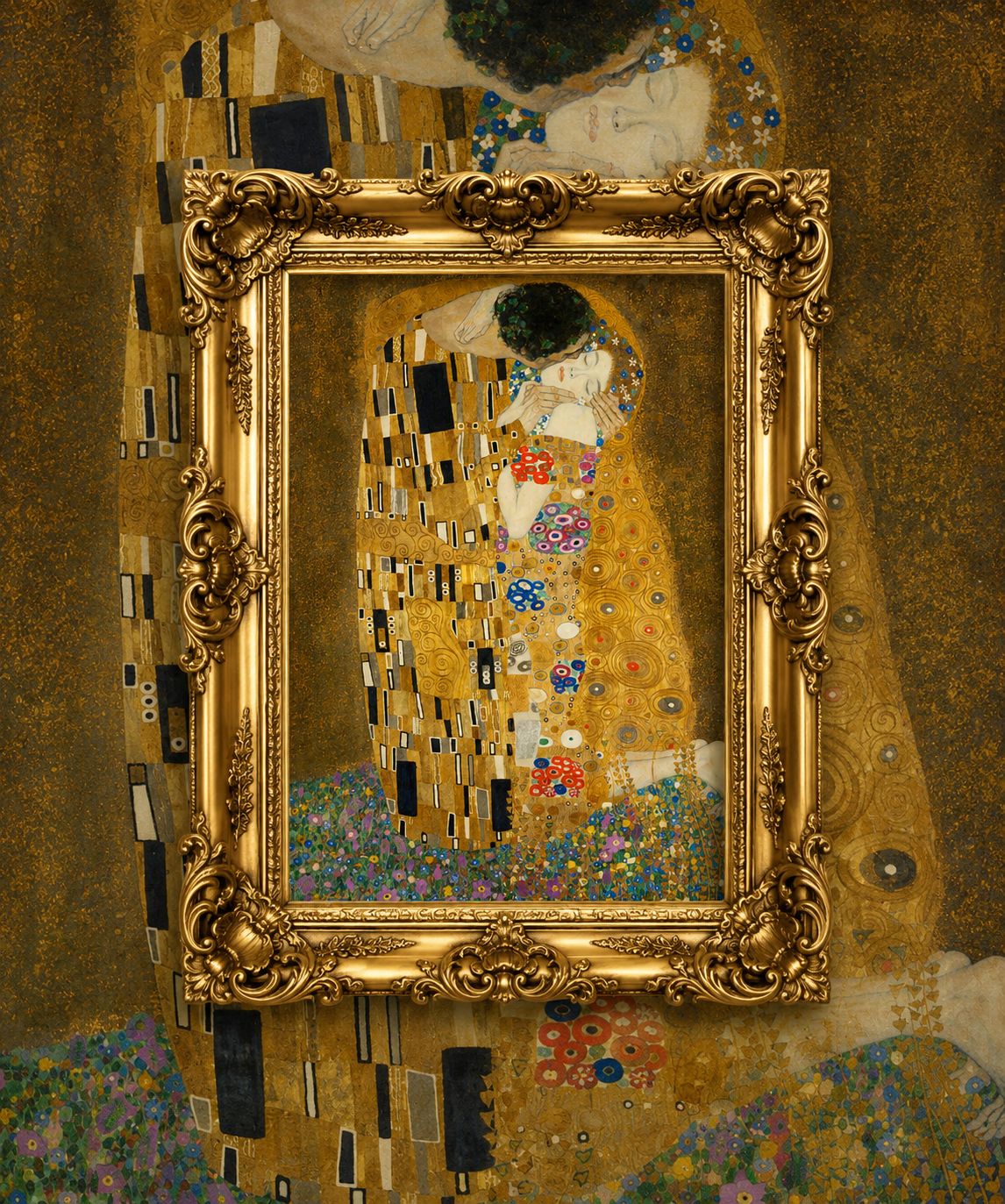
Classic artworks often bring familiarity, cultural memory and a sense of permanence. They can make a room feel grounded, collected and connected to a larger history of seeing.
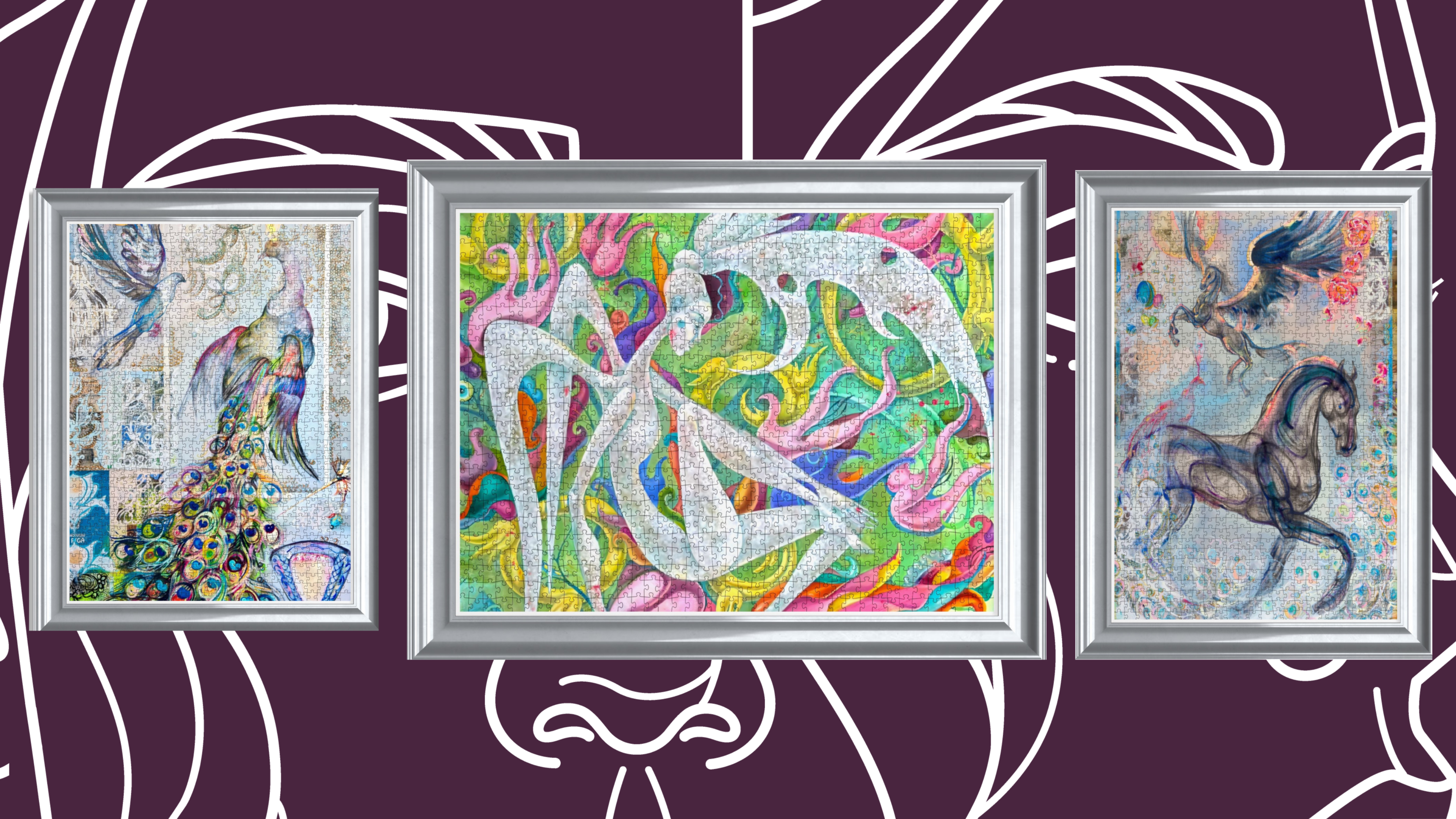
Contemporary artworks can feel more personal, current and alive. They may carry the atmosphere of a living artist, a local studio, a newer visual language or a story that feels closer to the present moment.
Neither is better. The strongest homes often contain both: something inherited from cultural memory and something that feels chosen now.
If you are drawn to museum-recognised works, explore DAILE Classics. If you want art connected to contemporary artists and newer stories, explore DAILE x Artist.
6. Choose art with a story you can return to
Wall art becomes stronger when it has a story. That story does not have to be complicated. It might be the artist, the place, the period, the subject, the person who gave it to you, or the evening you spent assembling it piece by piece.
Story gives an object staying power. It turns decoration into conversation and memory.
This is why museum shops, artist editions and meaningful gifts often feel more compelling than generic wall decor. They carry context. They are not only images, but invitations into a wider world.
For DAILE, this is central. An art puzzle gift set can include artwork story cards, artist cards and digital micro-book experiences through NFC, depending on the collection. These details help the artwork remain readable after the puzzle is complete.
7. Think about material presence
A printed poster, a canvas, a framed print, a textile, a ceramic object and a preserved puzzle all hold an image differently. The artwork may be similar, but the object is not.
A print is immediate. A puzzle is earned. A framed puzzle carries evidence of time: the small geometry of pieces, the decision to preserve it, the memory of assembling it and the quiet transformation from activity into art object.
This does not make a puzzle better than a print. It makes it different. If you want the wall to hold not only an image but also a process, an art puzzle can become a more personal form of wall art.
Where to place art in the home
Living room
The living room can usually handle stronger artwork because it is a shared space. Choose a piece with enough scale and presence to anchor the room. Landscapes, expressive florals, large figures and iconic artworks can work well here.
Bedroom
Bedroom art should usually support rest. Soft colour, romantic atmosphere, quiet interiors, gardens and calm figures tend to work better than high-contrast or overly busy images.
A work such as The Soul of the Rose belongs naturally in this emotional register: intimate, floral and reflective.
Dining room
Dining rooms benefit from art that creates warmth and conversation. Still lifes, social scenes, interiors, gardens and richly coloured works can add ceremony without making the space feel formal in a cold way.
Hallway
A hallway is a place of transition. Art here should create a small moment of attention. It can be more poetic, unexpected or personal because it does not have to dominate a room for hours.
Workspace or study
Choose art that supports concentration rather than visual noise. Architectural interiors, calm landscapes, subtle abstraction and artworks with measured rhythm often work well.
Museum-inspired decor without making your home feel like a museum
Museum-inspired decor is not about making a home look institutional. It is about bringing the seriousness, curiosity and visual pleasure of art into an everyday space.
To keep the result natural, avoid placing art as if it is untouchable. Let it live with books, flowers, personal objects and good lighting. The home should not imitate a white cube gallery. It should make art part of daily life.
The most successful museum-inspired homes feel collected rather than staged. They suggest that the owner has looked, chosen and lived with the objects over time.
Why art puzzles belong in this conversation
Art puzzles sit at the intersection of art appreciation, mindful activity and home decor. They are not only bought and hung. They are assembled, observed, preserved and then placed into the room.
That sequence changes the relationship between person and image. You do not simply select the artwork. You learn it through fragments: colour by colour, edge by edge, gesture by gesture.
For people who want a slower and more personal relationship with art at home, this matters. The final wall piece is not just decorative. It carries the memory of attention.
To understand how to choose an art puzzle specifically, read Art Puzzles for Adults: How to Choose a Masterpiece You’ll Want to Frame. To understand what happens after completion, see What to Do With a Finished Puzzle.
Common mistakes when choosing wall art
- Choosing by trend alone: the piece may look current but lose meaning quickly.
- Choosing too small: undersized art can make a wall feel emptier, not fuller.
- Ignoring colour temperature: the artwork may clash with the room even if the subject is right.
- Buying only to match furniture: art should connect with the room, but it should also bring its own life.
- Forgetting distance: highly detailed work needs close viewing, while large spaces need stronger composition.
- Choosing without story: generic images are easier to replace because they do not become part of memory.
A practical checklist before you choose
Before buying or framing any artwork, ask:
- What feeling should this room hold?
- Does the artwork support that feeling?
- Will the colours improve the room in morning and evening light?
- Is the scale right for the wall and furniture?
- Does the composition create calm, focus or movement?
- Is there a story or context that makes the image more meaningful?
- Would I still want to look at this in six months?
- If it is a puzzle, would I enjoy both assembling it and living with it afterwards?
Where to start with DAILE
If you are choosing for the wall first, begin with the room. Then choose the artwork. Then choose the experience.
DAILE Classics is a strong starting point for recognisable artworks and museum-inspired interiors. DAILE x Artist brings contemporary voices into the home. Gifts for Art Lovers is useful when the piece is meant to be given as a meaningful object rather than selected only for yourself.
Frequently asked questions
How do I choose wall art for my living room?
Start with the mood you want the room to have, then consider scale, colour temperature and composition. A living room can usually support a stronger visual statement than a bedroom or hallway.
Should wall art match the sofa?
It should relate to the room, but it does not need to match exactly. Exact matching can feel flat. A related colour, contrast or shared mood is usually more sophisticated than a perfect match.
What kind of art makes a room feel more expensive?
Rooms often feel more considered when the art has scale, restraint, strong framing, good placement and a sense of story. The artwork should feel chosen, not used as filler.
Can a puzzle be used as wall art?
Yes, if the image is strong enough and the puzzle is preserved properly. A framed art puzzle can work as wall art because it carries both the completed image and the visible trace of the assembly process.
Is museum-inspired decor still modern?
Yes, when it is treated naturally. Museum-inspired decor does not mean copying a gallery. It means choosing art with cultural, visual or historical depth and letting it live comfortably inside the home.
What is the best wall art for a bedroom?
Bedroom art usually works best when it supports rest: soft colour, gentle contrast, intimate subjects, gardens, interiors, quiet figures or atmospheric landscapes.
The final thought
The right wall art is not only the image that fills the space. It is the image that changes how the space feels.
Choose slowly. Notice colour, mood, scale, rhythm and story. Let the artwork earn its place not because it matches the room perfectly, but because it makes the room more alive.
And when the artwork has been assembled by hand, piece by piece, it carries one more layer: the time you gave to it before it became part of the wall.